

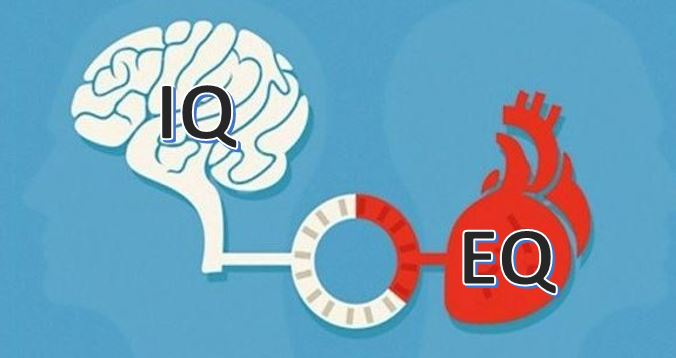
It’s often said, that IQ will get you the job, but EQ will allow you to keep the job. The good news is EQ is something you can develop to get stronger.
Lately, recruiters are caring more and more about asking Behavior Emotional Intelligence (EQ or EI) questions, as new research is always being brought forward. Studies show that most of the time, when a person is fired or resign from a company, it has nothing to do with the person’s technical ability and everything to do with their EQ. In response to this fairly obvious statement, recruiters continue to get formalized training to determine a candidate’s Behavioral EQ. It’s important for candidates to recognize an EQ question and quickly construct a strong answer.
If you read last week’s article, feel free to skip down to the Self-Awareness section. If you didn’t, it’s important to read this entire article, so you can understand how to answer a Behavioral EQ question.
Behavioral EQ can be defined as a model that emphasizes behavior and the outward actions that others notice and respond to, creating objective, measurable benefits. In other words, someone’s ability to accurately self-reflect and determine his/her emotions and those emotions of those around him/her. Then taking it one step further and being able to assess how those emotions will manifest into actions.
Other than retention numbers, why do recruiters care about Behavioral EQ?
First, for a good recruiter, retention numbers matter much more than hiring metrics. HR Managers care less about how many people a recruiter hired this month, and more about how many people who were hired, were a strong fit for the organization and contributed for the long term.
Other than that, people with high EQ are good people to work with and for. If you have high EQ, then chances are you get along with most of the people you encounter. You are aware of how to communicate and work with the vast majority of people in a way that makes them enjoy the interaction. We all want to work with more people like this. With that, recruiters are tasked with finding more people like this for their respective organizations.
A recruiters attempts to extract EQ information by asking questions that focus on a candidate’s specific history.
A Behavioral EQ question sounds something like, “Give me an example of a time when you had two different deadlines to meet for two different people and you couldn’t do both. What did you do?”
The correct way to answer this question and questions like this is by using the acronym C.A.R.:
Circumstance – Paint a word picture of where you were, when you were there and who was with you.
Action – What happened, what did you do, how did it make others feel?
Result – After you did your action, what was the result?
As I have mentioned before, it’s always good to be cognizant of how long you are taking to answer your recruiter’s question. With these types of questions, I would suggest you take more time to help your interviewer fully understand the scenario you are describing. Your answer should tell the story that allows the interviewer to understand your feelings and actions.
There is really only one way to answer this type of question wrong, and that is to not have a story. When you start your answer with, “what I would do in this situation…” or “usually I…” then you are not following the above model and you are answering the question incorrectly. The recruiter wants to know what you did do, not what you would do. Here is why.
Imagine you are driving down the road and you come to an intersection. As you approach, the traffic light turns from green to yellow. What do you do?
If you are in an interview, you would say, well I would slow down. Great job, this is the right answer!
Then I ask you this, “On your way here to the interview, what did you do when you passed through the last yellow light on the street before getting to our building? If the truth is, you sped up to beat the light before it turned red, now you may understand why recruiters are looking for you to give a specific time when you completed the action to the question.
We all know what we are supposed to do when faced with a dilemma, but not all of us do the right thing. A recruiter’s job is to figure out what you actually do, not listen to you talk about what you should or would do. Too often, people’s actual actions don’t match up with the perceived “right answer”. It’s often said, the best predictor of future behavior, is past behavior.
We will now explore a couple of common Behavioral EQ traits that are frequently reviewed during the interview process. Over the coming months, I will continue to post a couple at a time to ensure we all have a better understanding of what the real question the recruiter is getting at. What is the question behind the question being asked?
Self-Awareness
A common trait people like me try to evaluate is self-awareness. This characteristic is one’s ability to understand one’s own character, feelings, motives, and desires. More importantly, do you understand how your personality and behavior affects those around you? In laymen terms, are you a jerk and don’t know it?
A classic example of someone that’s probably lacking self-awareness is the guy that holds up an entire plane of people boarding, because he can’t seem to figure out which items he needs from his carryon. So, he stands in the middle of the isle while futzing with his bag. If he were to take one step into his seat, he could accomplish his same task, but not at the expense of everyone behind him.
One other example is the person who decides to talk excessively loud on their mobile phone, regardless of where they are and who is around them. These people seem to forget where their phone’s microphone is located. Seemingly they do their best to speak in a way that will ensure your phone, which is in your pocket, could clearly record the conversation for a future playback.
Bottom line, people like this are just not big fans of taking the time to think about how their actions and sometimes words affect others. This type of person can be a morale crusher to an office. This is the guy that no one wants to talk with. This type of person also can’t figure out when to stop talking, even though you are giving them every social cue you can imagine that says, “I am busy and have lost interest in what you were saying. Frankly, I lost interest prior to you even walking up to me.”
So how does someone like me try to weed out that type of person from working in an organization? I am going to lean in during the interview and use one or several of the following questions/requests to help determine what type of candidate I have:
- Tell me about a time when you knew your conduct was inappropriate in a meeting or interaction with another.
- Describe a time when you felt you were unfairly criticized, and how did you handle it?
- Tell me about a job you had in the past that you felt you outgrew. How did you know?
- Share with me an experience where you found you had to adapt your personality to work well with someone else.
Honestly though, I rarely ask either of the last two questions, because they just are not as much fun, as the first two. With that, if someone is having a hard time coming up with an example, perhaps they are not the most self-aware person. A good recruiter will do their best to help a candidate find a story to share, but the more you are prepared for this type of question the better your response will be.
Self-Control
This is a much easier EI trait to describe. Self-Control is what allows you to “bite your tongue.” My wife will tell you that this is one of my weaknesses for sure. I refer to it as the filter between my brain and my mouth gets turned off from time to time. Fortunately, the more I have become aware of this trait, the more I have improved my “filter.”
If I am trying to determine someone’s level of self-control, I am going to follow up with the following types of questions:
- Tell me about a time when something was better left unsaid. What were the details?
- Think of a situation in which you said something that you later regretted. Can you think of some specific details?
- We have all had bad days, share with me the last time you found yourself angry at work. What happened and what triggered it?
These questions will help me lead the candidate down a path of self-assessment, helping me determine when they messed up, did they make it right. We have all said something and later or quickly regretted from time to time. But what did we do after we said it? This is really what matters and the question behind the question here.
Prior to this article, in you were not prepared to answer questions on Self-awareness or Self-Control, you might think it’s better to not have an example, not wanting to admit you made a mistake. Now you should realize the “real” question is, when you have made a mistake in the past, how did you make it better?
What is the most frustrating type person to work with?
If I polled everyone that read this article that question, I would suspect we are going to get many different types of answers. The truth is though, I think we can all agree that someone that lacks both self-awareness and self-control is very high on the “jerk-meter.” The scary thing with these people is they are acting like a butt and don’t even know it. (If you have kids you can tell I do too, with my “G” rated language.) They just continue day after day to aggravate, and annoy all those around them, clueless to the carnage they are leaving in their wake.
Like I said earlier, I have a weakness when it comes to self-control over my words. Fortunately, I have pretty strong self-awareness. So when I do say the wrong thing, I am very quick to realize it and make amends. As I have matured, and become more aware that this is one of my areas I need to pay attention to and have gotten much better at controlling.
If an educated recruiter feels a candidate is lacking self-control and self-awareness, chances are they will move on to the next candidate. Work on your answers to questions like this, and you will be better positioned for future interviews. You might be like me and learn that you are lacking in one of these two areas and need to work on it. It’s never too late to become a better candidate, employee and person. We all have areas that we can become stronger in, and if you don’t think that is true about you, then I promise you, you are lacking some self-awareness.

 howtogetthejob.blog
2 thoughts on “What is Behavioral Emotional Intelligence interviewing and how do you succeed at it? A look into one of the worst types of people to work with…”