

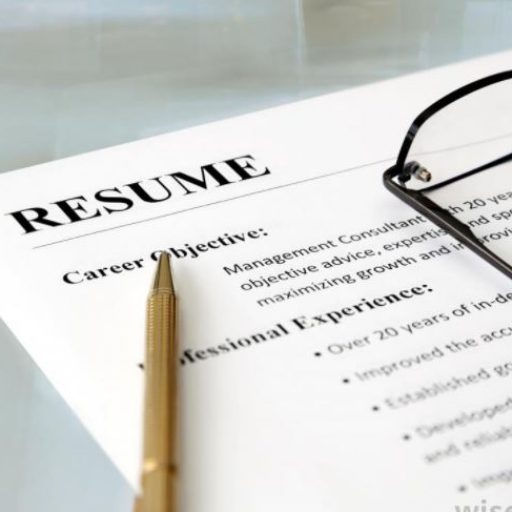
Yes, maybe if you are fresh out of school or a one dimension professional. The reason I say “maybe” is that a new graduate might have several interests and be looking to apply for several types of roles. If you don’t have much experience though, the resume is not going to change all that much with the exception of the “Professional Summary” or “Objective” section on the top of the resume. This should always be slightly customized for the role to which you are applying.
Just to clarify, I am not using the term “one dimension professional” as an insult. I simply mean that you are someone who has a very specialized skill set and would ultimately be applying to jobs that were nearly identical in scope. Perhaps you work in a plant or offshore on a rig and only want to do that. If that is the case, then there is not going to be too much customization of your resume. I would assume your format would display the equipment you have worked with and the processes you feel the most comfortable with.
Tip 1: Every time you submit a resume it should have some level of customization.
Even as a new high school or college graduate, you should be customizing your resume, ever so slightly, to each employer with whom you will apply. You don’t want your objective to say you are looking to join a growing company with many opportunities to grow if you are submitting your resume to a small mom and pop facility. That is a sure-fire way for them to say “this isn’t who we are looking for” right off the bat. The one-dimensional professional, can still customize based on the job description (matching requirements to bullets in your resume) and also expanding on your experience with any specific types of equipment/software/programs the company is currently using or requesting competency in.
I will explain better using an example of an offshore worker since that is my current space, but this can apply across the board.
Example: My company has 6th Generation Drillships (which is like a brand new Ferrari in car speak). If you are a person that has worked 20 years offshore, no doubt you have worked on older equipment during your time (or Hondas). If that is the case and your resume is 4 pages long, perhaps it is in your best interest to shrink down the experience on the older equipment, because it’s just not relevant, it takes up space on a page and requires a recruiter to take extra time and effort to sift through to locate the information that would qualify you to work with our company. If you think all your bullets are important, then you need to read one of my first blogs:
Why Is a Resume So Hard to Write? Don’t take this personal…
https://howtogetthejob.blog/2017/10/17/why-is-a-resume-so-hard-to-write-dont-take-this-personal/
At the end of the day, you get out what you put in. If I get a resume that talks about why you want to work at my company, then I am going to be more impressed then when I receive a resume that simply says, you want to work at a company.
So, if you should have many resumes ready to go and be prepared for future exiting opportunities, how can that be done in the least amount of time?
Tip 2: Create a resume bullet bank document
To be as efficient at creating a resume as possible, you should have a separate document that is outlined like your resume but much longer. It should include a bullet for every impressive thing you have ever done for each company. You might even want to go so far as to have them labeled.
For example, in my career, I have done a lot more than just recruiting and HR. I actually spent two years as a company training manager, and an instructor while in the Marine Corps. What I have done is created a bullet “bank” like a question bank for a test, and anything dealing with managing people is one color, anything dealing with training or instructing is another color, lastly HR and recruiting are in a third color. This allows me to quickly scan to find the bullets I need if I wanted to apply for a position that is focused on training and leading, versus recruiting and staffing.
Of course once I copy and paste the bullets into the new resume, I remove the font coloring, so it looks like it has been there all along, but by practicing this technique, you will be able to be much more productive when you are applying to many types of jobs across several different industries, and have a higher probability of getting an interview. Remember the resume gets you an interview, not the job!
Tip 3: A resume and resume bullet bank document, should be a living document
The resume bullet document should be a living document. When you are at work tomorrow and finish a new project, you will soon forget you completed it and perhaps what was unique and interesting about it. Once you do something that is interesting and exciting, go to your bullet rough draft and write a bullet about it. Then one day in the future when a job description requires that type of experience, you will already have a partially completed bullet scoped out.
By having your bullet summary sheet created, you are able to very quickly apply to multiple job descriptions in a short amount of time with a customized resume. That being said, never apply to different types of roles in the same company (Tip 4). It shows the recruiter and the company that you might not be passionate about anything and lack drive and focus. When you are applying for a position inside a large organization with many roles, but sure that the role you are interested in, you are really interested in it, because if you miss out on that role, it is not always wise to apply to another one in short amount of time, for the reasons stated above.
A job application is like dating. Even if you don’t like the person you are having a meal with on a first date, you never want to get up from the table and walk to someone at the bar and buy them a drink. Once you commit your attention to a role, it is best to see that action through to its conclusion, even if halfway through the process you no longer want that role and are interested in something else. I would much rather interview with four people, impress them all, and turn down the offer, than interview with one person and remove myself from contention, but that’s a conversation for a later blog.

 howtogetthejob.blog